Read on Twitter
Nitrogen fixing in soil is one of the most important aspects of sustainable farming ignored by the industrial trend of monocultural farming. Of course, the detriments caused by the monoculture are unending, but here I seek to focus on the nitrogen issues. (1)
What is nitrogen fixing: nitrogen fixing is simply the addition of nitrogen to soil otherwise lacking in or having been depleted in nitrates. Many farmers seek to mitigate the need for nitrogen in healthy plant growth via nitrate fertilizers, which is a mistake (2)
Nitrate fertilizers have added ammonium nitrate that allows for the quick replenishing of nitrates and quicker growth of plants, which is obviously a plus. However, excess nitrates are massively detrimental to aquatic life when they end up in streams and water bodies (3)
In an experiment on the fatality of nitrates for planaria, simple soft-bodied worms, I found the range of nitrate concentration to be fatal around 0.05g/100mL to 0.06g/mL. These macroinvertebrates serve as an important indicator of water health (4)
Nitrate levels also stimulate aquatic algae, which can cause negative algal blooms as well as the leaching of oxygen from water bodies causing dieoff of fish and other animals. Nitrate excess is, as well, fatal for these organisms in large amounts. (5)
What's the answer? It's rather simple. Polycultures or even crop rotation can be used to replenish nitrogen in the soil naturally. Legume plants have a symbiotic bacteria called rhizobia that allows the "fixing of nitrogen in soil. (6)
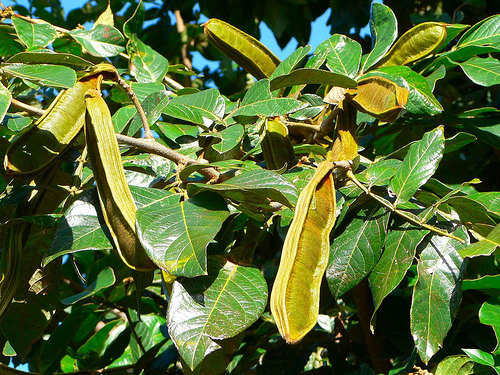
Both the pictured snow pea and ice cream bean plants have agriculture uses in their respective climates, and their incorporation within a farming system is a net positive. The harvesting needs shortcut by monoculture (result of industrial farming) are the only resistance