
 Read on Twitter
Finally, after 30 years or more of NU experimentation with the reintroduction of rear alleyways, one builder simply substitutes narrow alleys for streets and, through convergent evolution, arrives at what is the most common (for good reason) Japanese development pattern.
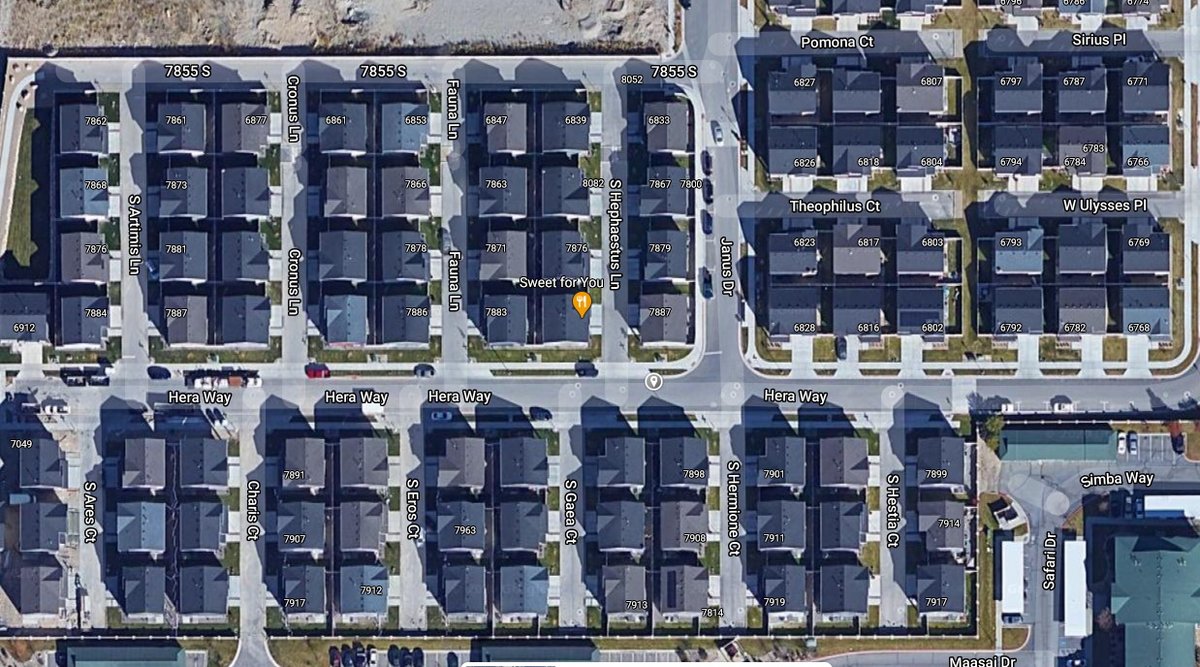
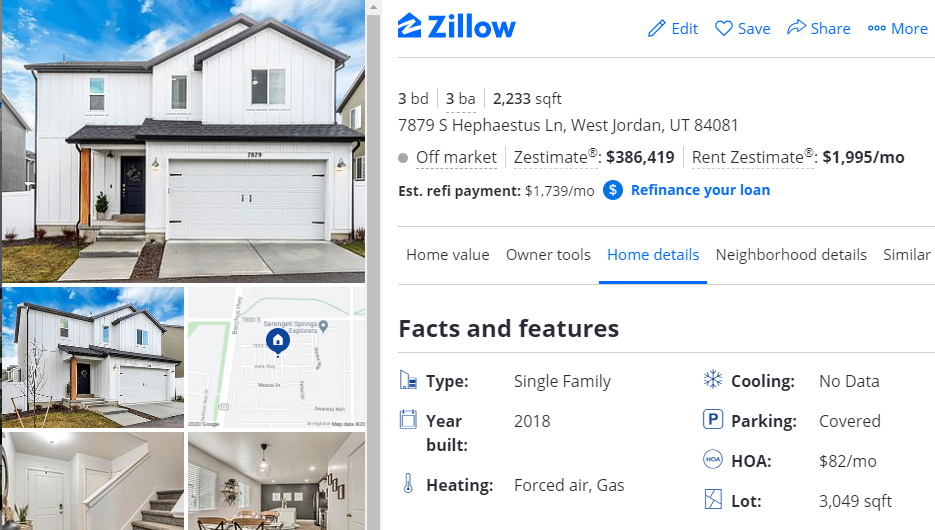
With the street/alley pattern, so much area had become devoted to ROWs that lots grew elongated to the point of impracticality to achieve an acceptable ratio of public to private land, and rear garages left little or no room for yards
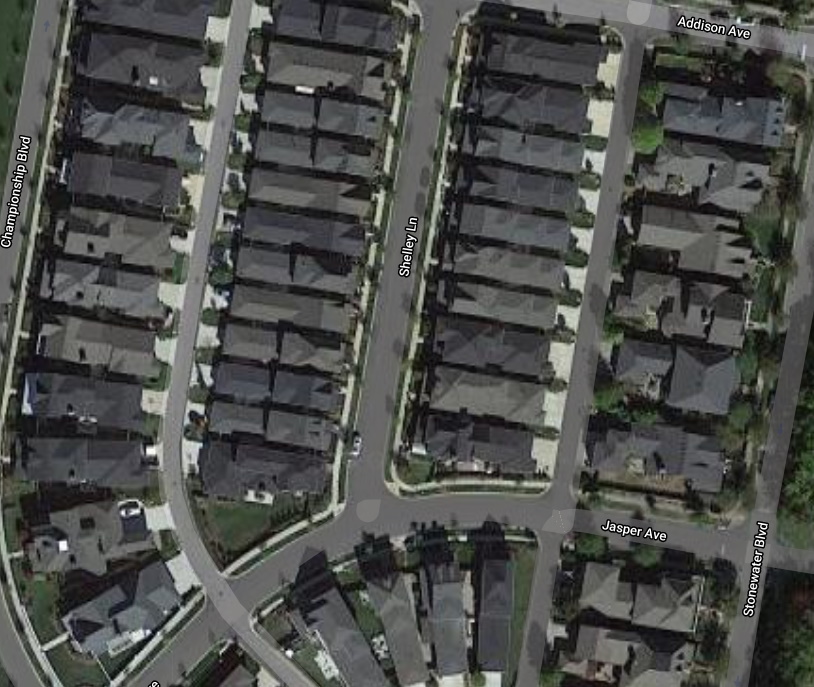
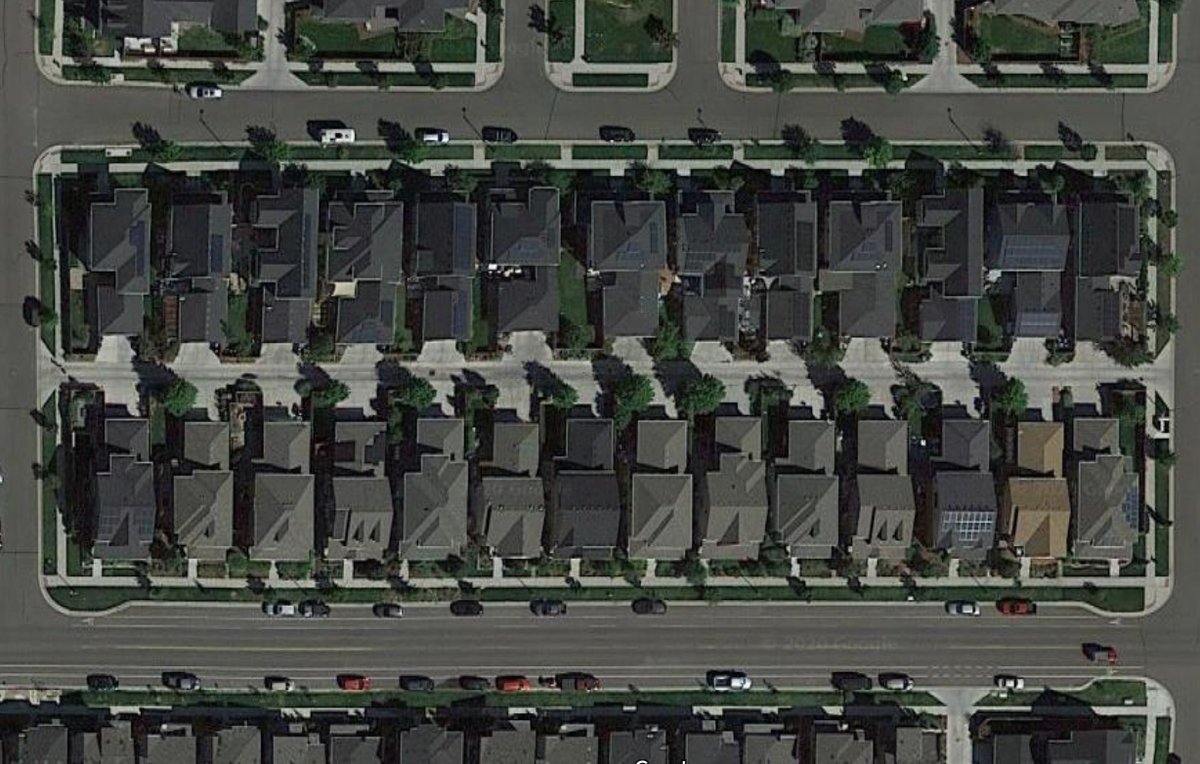
More recently, some planners realized that the alley had made the "street" redundant. When the street was omitted from some parts of newly-designed areas, however, a grassy common lawn occupied exactly the same space in which the street otherwise would have been.
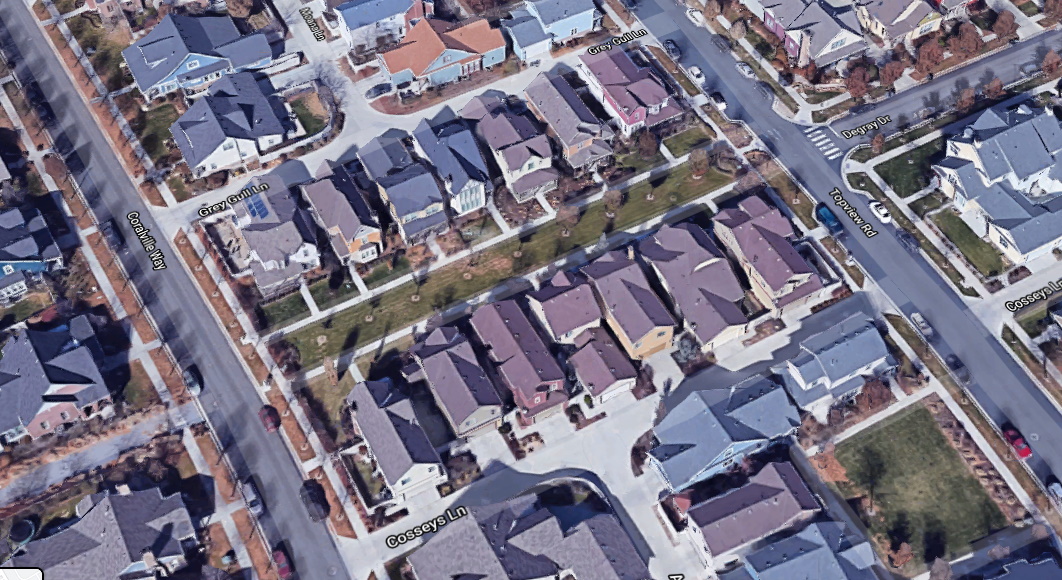
A complete reimagining of this insight, in which the street ROW is eliminated completely and the houses rotated to face the alley, reduces the ratio of public to private land and thereby allows the creation of square, or nearly square lots, as are common in Japan.
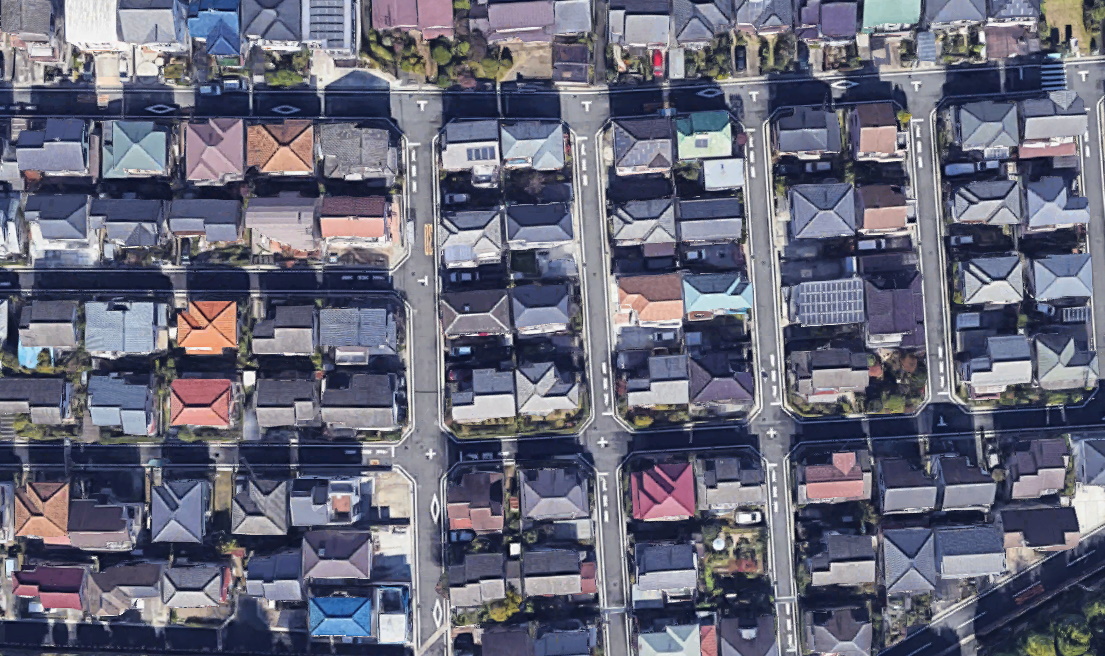
The square lots, in turn, have many advantages over a long and narrow lot of the same square footage. A square house will be more energy efficient, requiring fewer exterior walls to enclose the same square footage as in a house that is elongated, while ...
... the greater lot width also helps to prevent any garages from overwhelming the home's facade. The fear of a protruding front garage was, after all, one of the motivations for NU to reintroduce the alley in the first place.


